Resin Bound vs Block Paving: Which Driveway Surface is Best?
If you believe the most expensive driveway surface is automatically the most durable, you might be overlooking how Hampshire’s specific ground conditions dictate the true lifespan of your investment. Deciding between resin bound vs block paving often feels like a difficult choice between modern, seamless aesthetics and the time-tested reliability of traditional masonry. It is entirely natural to feel concerned by conflicting durability claims, especially when you are worried about the prospect of unsightly weed growth, sinking blocks, or the risk of resin cracking during a harsh British winter.
We understand that a driveway is more than just a place to park; it’s a significant structural component of your home that requires precision and care. You will discover the fundamental structural differences, realistic maintenance needs, and the long-term value associated with both materials to ensure your choice remains a source of pride for years to come. We will examine how each surface handles heavy vehicular traffic and varied drainage requirements, providing you with a clear framework to evaluate which specialist solution best suits your property in Southampton, Winchester, or the surrounding regions.
Key Takeaways
- Understand the fundamental differences between a seamless resin bound aggregate finish and the structured, geometric appeal of traditional interlocking block paving.
- Learn why sub-base engineering is the most critical factor for longevity and how to ensure your new driveway meets current UK SUDS drainage regulations.
- Evaluate the structural pros and cons of resin bound vs block paving to determine which material best withstands heavy vehicular traffic and local weather conditions.
- Discover a realistic framework for long-term upkeep, dismissing the myth of maintenance-free surfaces whilst planning for seasonal cleaning and essential re-sanding.
- Gain the confidence to select the right surfacing specialist by matching your Hampshire property’s specific ground conditions to the most appropriate installation method.
Understanding the Basics: What is Resin Bound vs Block Paving?
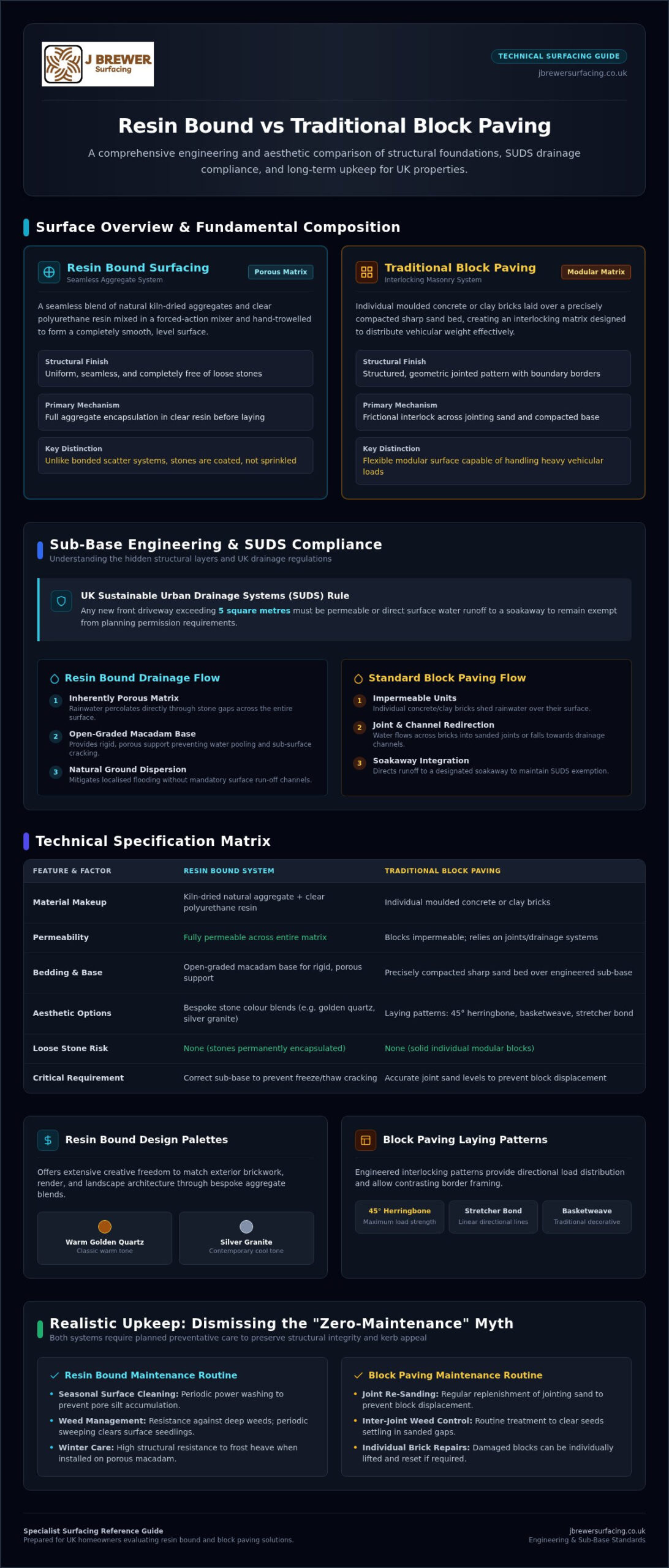
Selecting a new driveway involves weighing up aesthetic preferences against practical durability. When comparing resin bound vs block paving, you’re essentially choosing between two high-performance surfacing methods that serve different architectural styles. A resin bound system consists of a seamless blend of natural stone aggregates and clear polyurethane resin, creating a smooth, porous finish. Conversely, block paving relies on individual moulded concrete or clay bricks, which are laid in interlocking geometric patterns to provide a robust, flexible surface.
It’s vital to distinguish resin bound surfacing from cheaper, non-permeable resin bonded scatter systems. Unlike bonded systems where gravel is simply sprinkled over a resin layer, the bound method ensures every stone is coated before installation. This results in one of the most effective permeable paving systems available today, allowing water to drain naturally whilst preventing the loose stone migration common with traditional gravel. Both premium options significantly enhance kerb appeal, and when installed by a specialist, they add substantial long-term value to your property.
The Anatomy of a Resin Bound Surface
The installation process involves mixing kiln-dried aggregate stones with a high-quality resin binder in a forced-action mixer. Once thoroughly coated, the mixture is hand-trowelled onto a prepared base to create a perfectly level, seamless finish. This method eliminates the nuisance of loose stones, ensuring your driveway remains tidy and safe for pedestrians. Homeowners often appreciate the creative freedom this material offers; you can select from a vast array of bespoke colour palettes, from warm golden quartz to contemporary silver granite, to complement your home’s exterior perfectly.
The Architecture of Traditional Block Paving
Traditional block paving remains a favourite across Hampshire due to its structural versatility and timeless appearance. The system uses individual blocks laid over a precisely compacted sharp sand bed, creating an interlocking matrix that distributes weight effectively across the surface. You can choose from various patterns, such as the classic 45-degree herringbone for maximum strength, or basketweave and stretcher bond for a more decorative feel. By incorporating contrasting block borders, we can organise and frame the space, providing a sharp, professional finish that defines the boundaries of your property with meticulous care.
Structural Differences: Sub-Bases, Drainage, and SUDS Compliance
A driveway’s endurance is rarely defined by the visible surface alone; instead, its longevity rests almost entirely on the quality of the sub-base engineering hidden beneath. When comparing resin bound vs block paving, the way water interacts with the structural layers determines whether the installation will remain pristine or succumb to sinking and rutting. Proper ground preparation is essential for both systems, yet the engineering principles vary significantly to accommodate their unique physical properties. Failing to account for the underlying soil conditions can lead to costly repairs, making the initial excavation and foundation work the most critical phase of any project.
Permeability and Water Management
Resin bound surfacing is inherently porous, allowing rainwater to percolate directly through the stone matrix and into the sub-base below. This natural drainage reduces surface runoff and helps prevent the localised flooding often associated with traditional hardstanding. In contrast, standard block paving is typically impermeable, meaning water flows across the bricks into the joints or towards specific drainage channels. Sustainable Urban Drainage Systems (SUDS) regulations state that any new front driveway exceeding five square metres must be permeable or direct water to a soakaway to remain exempt from planning permission. Ensuring your project is properly designed and constructed is the best way to stay compliant whilst protecting your property from water damage.
Sub-Base Requirements and Ground Preparation
The sub-base acts as the foundation for your investment, and its composition must match the surface material. For a resin bound finish, we typically install an open-graded macadam base to provide the rigid, porous support the material requires to prevent cracking. Block paving relies on a flexible system, comprising a layer of compacted Type 1 MOT hardcore topped with a bed of sharp sand to allow the blocks to seat correctly. Local Hampshire soil variations, such as the heavy clay found around Southampton or the flint-heavy chalk common in Winchester, dictate the depth of excavation required to prevent seasonal shifting. If you are unsure about the specific requirements for your land, our team can provide a professional site assessment to determine the ideal structural approach for your home.
Resin Bound vs Block Paving: Side-by-Side Comparison
While many contractors claim one material is universally superior, the reality of choosing between resin bound vs block paving depends on your property’s unique layout and functional requirements. A modern Southampton townhouse might benefit from the sleek, minimalist lines of resin, whereas a traditional Winchester farmhouse often requires the structural weight and classic charm of clay pavers. It isn’t just about looks; you must consider how each surface manages heavy vehicular traffic. Block paving distributes weight through an interlocking matrix, making it exceptionally resilient under heavy loads, while resin bound systems provide a smooth, trip-free surface that excels in pedestrian safety and light vehicle use.
Matching your driveway to your home’s architectural style is equally important for long-term satisfaction. The seamless finish of resin bound aggregates offers a contemporary feel that can make smaller spaces appear larger and more cohesive. Block paving, however, provides a sense of permanence and texture that complements period properties. Both options represent a significant investment in your home’s kerb appeal, provided they are chosen with an understanding of their specific mechanical strengths.
Durability and Lifespan Under UK Weather
British winters place significant stress on outdoor surfaces through repeated freeze-thaw cycles. Block paving handles these shifts with ease because the sand-filled joints allow for minor thermal expansion without the surface cracking. In contrast, resin bound systems rely on high-quality, UV-stable binders to prevent the material from becoming brittle or discoloured under the summer sun. Both are considered effective permeable pavement systems, but their repair profiles differ. If a single block is stained by oil, it can be lifted and replaced in minutes; however, patching a resin surface invisibly is far more challenging, often requiring a larger section to be re-laid to maintain aesthetic consistency.
Installation Timelines and Disruption
The time spent on-site varies significantly between these two methods. If you already have a suitable, solid base, a resin bound transformation can often be completed in a single day, offering an immediate visual overhaul with minimal disruption to your daily routine. Laying block paving is a more meticulous, labour-intensive craft that involves hand-setting hundreds of individual bricks to ensure the pattern is perfectly aligned. Our specialist teams in Southampton and Winchester prioritise a tidy work site, ensuring that whether you choose a rapid resin trowelling or a hand-laid block design, the process remains as low-friction as possible for your household.
Long-Term Maintenance: Keeping Your Driveway Looking Pristine
Dismissing the myth that any driveway remains completely maintenance-free over a decade is the first step toward protecting your investment. Whilst both surfaces are engineered for longevity, the accumulation of organic matter, seasonal detritus, and atmospheric pollutants will inevitably affect their appearance if left unaddressed. Understanding the nuances of resin bound vs block paving maintenance ensures you use the correct tools to preserve structural integrity without causing accidental damage. Whether you’re dealing with autumn leaf fall or summer algae growth, a methodical approach to cleaning keeps your property looking its best year-round.
Resin Bound Upkeep: Preventing Moss and Stains
Regular sweeping is the most effective way to prevent leaf mould from clogging the permeable stone matrix. If debris is allowed to decompose, it can create a fertile bed for moss and weeds to take root on the surface. When the time comes for a deeper clean, you should use a pressure washer with a wide fan-tip nozzle, keeping the lance at least 25cm from the surface to avoid delaminating the resin bond. For occasional oil spills or tyre marks, a simple solution of warm water and household detergent usually suffices, provided you act quickly to prevent the stain from penetrating the aggregate colour. Maintaining this seamless finish requires minimal effort, but consistency is key to preventing long-term weathering.
Block Paving Maintenance: Combating Weeds and Sinking
A common misconception is that weeds grow from beneath the blocks, but they actually germinate in the sand joints from wind-blown seeds. To combat this, an annual deep clean is necessary to remove dirt and old sand that has become contaminated. It’s essential to follow this with a thorough re-sanding process, as the kiln-dried sand is what maintains the interlocking strength of the entire system. Over time, heavy vehicular traffic might cause minor structural dipping in specific areas; in these cases, specialist block paving maintenance can lift the affected blocks, replenish the sub-base, and relay them to a perfect level. If your current surface is showing signs of neglect, you can arrange a professional maintenance assessment to restore its structural resilience and visual appeal.
Making the Right Choice for Your Hampshire Home
Finalising the decision between resin bound vs block paving requires a pragmatic evaluation of your property’s specific layout and your long-term lifestyle goals. Whilst aesthetic preference plays a significant role, you must also account for your initial installation budget and the predictable costs of future upkeep. Selecting an established local contractor who excels in both disciplines is the most reliable way to ensure your investment remains structurally sound, as they will provide unbiased advice based on the unique ground conditions found across the Hampshire region. Whether you are modernising a suburban frontage in Southampton or restoring a rural entrance in Winchester, the right choice balances immediate visual impact with decades of functional service.
When to Choose Resin Bound
Resin bound surfacing is often the superior choice for homeowners who favour a sleek, contemporary aesthetic and a perfectly level, puddle-free finish. Its flexibility makes it exceptionally well-suited for properties with complex curved paths or steep inclines where traditional materials might struggle to maintain stability. If your home is subject to strict SUDS drainage requirements, or if you simply wish to limit property disruption with a fast final installation phase, a premium resin aggregate finish provides a sophisticated and practical solution. This method transforms the exterior of your home into a clean, cohesive space that requires very little daily attention to remain pristine.
When to Choose Block Paving
Traditional block paving remains the preferred option for period properties where classic kerb appeal and distinct, decorative borders are essential design elements. This system offers unmatched performance under heavy, twisting vehicular loads, making it the ideal selection for busy family driveways or areas with commercial traffic. A significant practical advantage is the ease of underground utility access; should you ever need to reach pipes or cables, individual blocks can be lifted and relaid seamlessly without leaving a permanent scar. This versatility ensures that your driveway can adapt to future changes in your home’s infrastructure without requiring a complete replacement. Ready to transform your property? Contact J Brewer Surfacing & Landscaping for expert advice across Southampton and Hampshire.
Investing in Your Property’s Future Resilience
Choosing between resin bound vs block paving isn’t just a matter of style; it’s a commitment to the structural integrity and kerb appeal of your home. Whether you’re drawn to the contemporary, puddle-free finish of a resin aggregate or the robust, traditional charm of interlocking blocks, your decision should always be underpinned by expert sub-base engineering and strict SUDS compliance. We’ve explored how each material behaves under British weather conditions and the specific maintenance required to keep them looking pristine for the long term. Each surface offers unique benefits, yet their success relies on the precision of the initial ground preparation.
At J Brewer Surfacing & Landscaping, we take pride in being expert installers of both systems, ensuring every project in Southampton, Winchester, and across Hampshire is built to last. Our team possesses the highly localised knowledge needed to navigate diverse ground conditions, giving you peace of mind that your investment is in safe hands. If you’re ready to enhance your outdoor space with meticulous local craftsmanship, you can request a professional driveway consultation from J Brewer Surfacing & Landscaping today. We look forward to helping you create a beautiful, durable entrance that stands the test of time.
Frequently Asked Questions
Is resin bound cheaper than block paving per square metre?
Initial installation costs for resin bound vs block paving are often comparable, though the final figure depends heavily on the condition of your existing sub-base. Resin bound is frequently more economical when it can be laid over a pre-existing, stable surface like old tarmac or concrete. However, if a full excavation and new foundation are required for your Southampton home, block paving might offer similar upfront value. You should always consider long-term maintenance costs alongside the initial price.
Can resin bound be laid directly on top of old block paving?
We strongly advise against laying resin bound surfacing directly over old block paving because the individual blocks can shift independently over time. Since resin creates a rigid, monolithic layer, any movement in the blocks beneath will almost certainly cause the surface to crack and fail. For a durable finish in Winchester, we always recommend a stable, open-graded macadam base that provides the necessary structural support whilst maintaining the system’s essential permeability.
Do weeds grow through a resin bound driveway?
Resin bound driveways are remarkably resistant to weeds because the seamless surface lacks the soil-filled joints where seeds typically take root. It’s a common misconception that weeds grow from beneath the driveway; in reality, they usually germinate in organic detritus that settles on top of the stones. Regular sweeping and an occasional wash will prevent this buildup, ensuring your Hampshire property remains tidy and free from unwanted growth throughout the changing seasons.
Which driveway surface is less slippery during winter frosts?
Resin bound surfacing is generally considered less slippery during winter frosts because its porous structure prevents standing water from pooling and freezing on the surface. The natural texture of the stone aggregate also provides excellent grip for both tyres and pedestrians. Whilst block paving is also safe, it can become slick if algae or moss are allowed to build up in the joints, making regular professional cleaning essential for maintaining traction during a Portsmouth winter.
Do I need planning permission for a resin bound or block paved driveway in Hampshire?
You typically don’t need planning permission for a resin bound driveway in Southampton or Winchester because the surface is fully permeable and compliant with SUDS regulations. Planning permission is only required for front gardens larger than five square metres if you use impermeable materials that don’t direct water to a soakaway. We always ensure our Hampshire installations meet these legal requirements, protecting you from the enforcement notices that can arise from non-compliant driveway projects.
How long must I wait before parking my car on a newly installed driveway?
You can usually walk on a newly installed resin bound surface after about eight hours, but you should wait at least 48 hours before parking a vehicle on it. This allows the polyurethane binder to cure fully and reach its maximum structural strength. For block paving, the surface is technically ready as soon as the final re-sanding is complete, though we often suggest waiting 24 hours to let the sand settle properly before subjecting it to heavy vehicular traffic.
Can individual damaged blocks or resin sections be repaired easily?
Individual blocks are much simpler to repair because a single damaged or stained brick can be lifted and replaced without affecting the surrounding area. Repairing resin bound sections is more complex; whilst patches are possible, they are often visible due to slight variations in aggregate batches and weathering. For our clients in Hampshire, we provide dedicated maintenance services for both materials to ensure that any minor wear or damage is managed professionally to preserve the driveway’s appearance.