
Patio Pressure Washing Hampshire: A Safe, Practical Cleaning Guide
The safest patio clean starts with the paving, not the pressure washer. Algae, grime and organic growth can leave slabs looking tired and make them slippery, so it is natural to reach for a powerful clean. But patio pressure washing Hampshire homeowners can rely on begins with assessing the surface. Sandstone and limestone need a gentler approach than hard-wearing porcelain, while directing water too close to any paving can disturb joints or affect a sealant.
A careful clean does not treat every slab the same. This guide explains how to assess your paving, prepare the area and choose between brushing, a gentler cleaning method and controlled pressure washing. It also covers what to look for in the jointing material and any existing sealant before you start.
Washing is one part of looking after an outdoor space. J Brewer Surfacing & Landscaping provides patio pressure washing and ongoing maintenance across Hampshire, including joint repairs where needed. The guidance below can help you decide what your patio needs and when professional maintenance may be more practical.
Key Takeaways
- Before cleaning, check for loose slabs, failed joints and vulnerable edges so you can spot areas that need attention first.
- Choose a cleaning method to suit the paving. One pressure setting is not right for every patio.
- For patio pressure washing Hampshire homeowners should prioritise controlled cleaning and protect jointing material and existing sealant.
- Prepare the area, clean methodically and inspect the finish to make patio cleaning safer and more effective.
- If access is difficult, soiling is extensive or joints have deteriorated, professional patio maintenance and joint repairs can help restore the space.
Why Hampshire patios need a surface-aware pressure-washing approach
Patios collect grime, algae and loose organic growth through everyday use. Hampshire’s changeable, often damp weather can leave shaded corners and slow-drying areas looking dirty or feeling slippery sooner than exposed paving. Keep an eye on these spots, but let the patio’s material and condition guide how you clean it.
Pressure washing uses directed water to loosen and remove surface deposits. It is not a single-setting solution for every paved area. The paving material, joint condition and any previous sealing all affect which method is suitable. For a general overview, see Pressure washing. For patio pressure washing Hampshire homeowners need to consider how to remove dirt without putting vulnerable stone, joints or sealant at unnecessary risk.
What pressure washing can remove from patio paving
Controlled washing may lift visible dirt, algae and loose organic debris, helping the paving look fresher and removing some of the film that can make it feel slippery. It will not necessarily remove every mark. Deep stains, discolouration or ingrained deposits may need a different treatment. Missing jointing material needs repair, not more water pressure. Results depend on the patio’s condition, the type and extent of soiling, and the method used.
Think of routine washing as one part of patio care, not a complete restoration. It can improve the appearance of existing paving, but it cannot secure a loose slab or rebuild a failed joint.
Why paving and patio joints matter before cleaning
A patio can look solid while having cracked pointing, loose edges or patches repaired in the past. Inspect these areas before washing. Forceful water may disturb some jointing materials or make existing defects more apparent. If the joints are deteriorated, cleaning alone will not resolve the problem.
Different surfaces need different care. Natural stone varies in character and porosity, concrete slabs have their own finishes, and a sealed patio may be affected by aggressive cleaning. Check for damage and identify any existing sealant before choosing a method. A surface-aware clean helps protect the paving’s appearance, joints and finish.
How paving, joints and sealants affect patio pressure washing
The right cleaning method depends on more than how dirty the patio looks. Paving material, wear, joint condition and previous treatments all influence how it may respond to water under pressure. Use this comparison as a starting point, then check the care guidance for your specific paving and any sealant.
| Paving type | Main cleaning concern | Cautious approach |
|---|---|---|
| Natural stone | Stone types vary in texture, porosity and susceptibility to wear. | Identify the stone and follow its care guidance; test a discreet area first. |
| Concrete paving slabs | Surface finish, age and previous repairs can affect how the slabs respond. | Check for worn or damaged areas and avoid directing force at weak points. |
| Sealed paving | Pressure or cleaning products may affect the existing finish. | Establish what treatment was applied and follow its maintenance instructions. |
Natural stone and paving slabs: check the surface first
Natural stone is not one uniform material. Sandstone and limestone, for example, can differ in porosity and durability. Concrete slabs also vary in finish and condition. Identify the paving before choosing a method, and look for wear, scratches and signs of previous treatment. Testing a discreet area and consulting the relevant care guidance can show how the surface responds before you clean a wider area.
This assessment is especially useful for patios in Southampton, Winchester, Gosport, Fareham, Portsmouth, Romsey and Whiteley where the paved area combines different materials or has been repaired over time. The HSE safety guidance for pressure cleaners is also a useful reference for safe equipment use.
Patio joints and sealants: what to inspect
Look closely for loose, cracked or missing jointing before you begin. Water directed into a weak joint may dislodge more material or expose movement that was already present. Repairing the joint first, or using a gentler method, may be more appropriate. If a joint is already loose, directing water at it could worsen the problem. Check the full patio rather than assuming joints are intact because they look sound from a distance.
Sealants need similar care. Whether they can withstand pressure washing depends on the paving and the treatment applied, so do not assume direct pressure is compatible. Check the sealant’s maintenance guidance and assess the surface before cleaning. J Brewer Surfacing & Landscaping provides patio maintenance and joint repairs across Hampshire.
Does patio pressure washing damage paving? How to reduce the risk
Pressure washing can suit some patios, but an unsuitable method may damage vulnerable paving or disturb weak joints. The aim is to remove surface grime without stripping jointing material, marking a worn surface or affecting a previous treatment. Higher pressure does not automatically mean a better or safer clean. Excessive force can cause problems that a measured approach may avoid.
The correct cleaning method depends on the paving, its condition and the integrity of its joints. A firm, well-maintained surface may tolerate a different approach from fragile stone, loose slabs or a patio with open pointing. Cleaning may improve the appearance of the surface, but it cannot repair movement, failed joints or persistent staining.
When a gentler cleaning method may be the better choice
Pause before using direct pressure if slabs move underfoot, joints are cracked or deteriorated, the surface looks fragile, or you are unsure how a sealant will respond. Manual brushing with water, or another less forceful method suited to the material, may be more appropriate. If a joint is already loose, directing water at it could worsen the problem. Repair the defect before washing.
There is no pressure setting that suits every patio. Equipment, paving materials and their condition vary, so follow the machine instructions and relevant surface-care guidance rather than relying on a universal setting. If a test area shows a visible change or joint material lifting, stop and reassess the method.
Protect people, plants and nearby property
Good preparation helps reduce avoidable hazards and splash damage. Before cleaning:
- Move garden furniture, pots and other loose items out of the work area.
- Keep people and pets away from the immediate cleaning area.
- Consider where spray and loosened debris may travel, including towards doors, windows, garden planting and electrical fittings.
- Follow the equipment instructions and use appropriate protective equipment.
Take particular care around electrical fittings and connections, and do not direct water at them. If you are uncertain whether a surface or joint can withstand washing, choose a gentler option or pause until its condition has been assessed. A careful approach to patio pressure washing Hampshire properties can help refresh paving while protecting its finish and the surrounding garden.
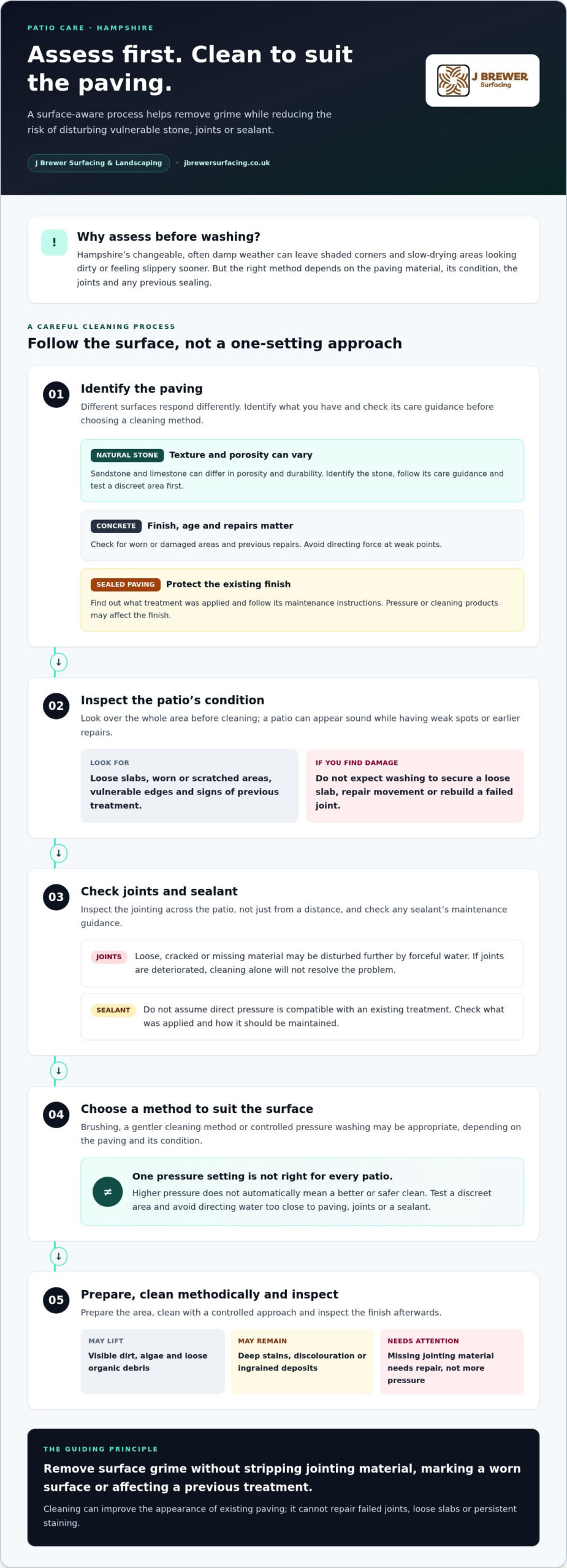
How to pressure wash a patio in Hampshire: a careful step-by-step method
A tidy result depends on preparation as much as washing. Follow a measured sequence, and pause if inspection reveals loose paving, weak joints or a surface that needs a gentler method. Use equipment and material-care guidance rather than relying on a pressure setting that may not suit your patio.
- Inspect before setting up. Check for loose or rocking slabs, failed or missing joints, cracks and vulnerable edges. Look for previous repairs, sealant or other treatments that could affect cleaning. If the patio has significant defects, address them before washing rather than directing water at the problem.
- Clear and prepare the area. Move furniture, pots and loose items, then sweep away leaves and other debris. Keep people and pets clear of the work area. Consider nearby doors, windows, planting and electrical fittings where spray could reach.
- Read the guidance. Check the washer’s instructions and care guidance for the paving material or existing sealant. Do not assume that a method suitable for one patio is right for another.
- Test discreetly. Try the chosen method on a small, less visible area. Check the surface and joints for unwanted changes before continuing across the patio.
- Work in manageable sections. Keep the cleaning action controlled and consistent, moving methodically rather than lingering over one spot. Avoid directing concentrated water into joints, slab edges, cracks or existing defects.
- Pause if the surface reacts badly. Stop if jointing material lifts, the finish appears to change or a slab shifts. Reassess the method and use a gentler alternative where appropriate instead of increasing the force.
- Make final checks. Look over the joints and edges for signs of disturbance, then allow the patio to dry before judging the finish. In Hampshire, drying time varies with the weather, shade and how exposed the patio is, so a damp area may take longer to show its true appearance.
Cleaning is only one part of keeping paving in good condition. If an inspection reveals worn joints or loose slabs, J Brewer Surfacing & Landscaping provides patio pressure washing, maintenance and joint repairs across Hampshire. Learn about professional patio maintenance.
When professional patio pressure washing in Hampshire can help
Some patios need more than a routine clean. Extensive soiling, difficult access or delicate paving can make it harder to choose and apply a suitable method. Professional maintenance is also useful when the condition of the joints is uncertain. Washing may remove surface grime, but it will not correct movement, failed pointing or missing jointing material.
Signs your patio may need more than a routine clean
Persistent grime, widespread organic growth or an uneven appearance after cleaning are reasons to reassess the patio rather than simply applying more force. Recurring joint loss is another sign that washing alone may not be enough. Loose or uneven slabs should be considered separately from surface dirt, as they may need attention before cleaning.
The right maintenance depends on how the patio was built, the paving material and its current condition. If a marked area might need careful cleaning, a joint repair or broader attention, an assessment can help distinguish between them. For patio pressure washing Hampshire homeowners should let the condition of the existing surface guide the approach rather than treating every patio alike.
Patio pressure washing and maintenance across Hampshire
J Brewer Surfacing & Landscaping provides patio pressure washing and ongoing patio maintenance, including joint repairs alongside cleaning. This approach is useful when a patio needs both a refreshed appearance and attention to worn or missing joints. The service is suitable for existing paved spaces, including patios made with natural stone and paving slabs.
Professional help can be practical where access is awkward, soiling covers a wide area or fragile paving calls for a cautious method. It can also help address recurring joint loss as a maintenance issue, rather than treating it as a cleaning problem alone.
J Brewer Surfacing & Landscaping provides patio maintenance across Hampshire, including Southampton, Winchester, Gosport, Fareham, Portsmouth, Romsey and Whiteley. Arrange patio pressure washing or joint repairs with the team.
Keep your patio looking its best with considered care
A cleaner patio starts with understanding the paving, not choosing the strongest wash. Check the surface, joints and any sealant before cleaning, then adapt the method to their condition. This helps reduce the risk of disturbing vulnerable areas while lifting everyday grime and organic growth.
For patio pressure washing Hampshire homeowners should remember that washing is only one part of maintenance. Loose slabs, failed joints and persistent marks may need attention beyond routine cleaning. Inspect the finish once the paving has dried and address visible defects rather than washing over them.
J Brewer Surfacing & Landscaping provides patio pressure washing and ongoing maintenance, with joint repairs available alongside cleaning. Whether you are refreshing a well-used paved area or concerned about worn joints, a careful assessment can help identify a sensible next step. Arrange patio pressure washing and maintenance in Hampshire.
Frequently Asked Questions
Can pressure washing damage patio slabs or joints?
Yes. Pressure washing can damage vulnerable paving or disturb weak joints if the method is too forceful or unsuitable for the surface. Worn stone, cracked pointing and loose slabs need particular care. Direct pressure may also affect a sealed finish. Inspect the patio before cleaning and test a discreet area first. If jointing material lifts or the surface changes, stop and choose a gentler method.
What pressure should I use to clean a patio?
There is no single pressure setting that suits every patio. The right approach depends on the paving material, its condition, the equipment and the state of the joints. Follow the washer’s instructions and relevant care guidance for the surface rather than assuming a higher setting will clean better. Test a small, inconspicuous patch and stop if the paving finish changes or jointing starts to come loose.
How often should I pressure wash my patio in Hampshire?
There is no fixed schedule for every patio. Check for grime, algae or slippery build-up, paying particular attention to shaded areas and places that stay damp. Hampshire’s changeable weather, the patio’s exposure and the paving material all affect how quickly deposits return. Clean when needed rather than washing repeatedly out of habit, as unnecessary or overly forceful cleaning can wear surfaces and joints over time.
Can I pressure wash a patio with loose or missing jointing?
Avoid directing pressure at loose or missing jointing. Water can dislodge more material or worsen an existing weakness, and washing will not repair the joint or stabilise a loose slab. Inspect the affected area and consider repair before cleaning. If jointing keeps disappearing or slabs move, treat this as a maintenance issue rather than trying to solve it with a more powerful wash.
Should I use a patio cleaner or detergent with a pressure washer?
Use a cleaner or detergent only if it is suitable for your paving and compatible with the pressure washer, and follow its instructions carefully. A product that works on one surface may not suit another, particularly where natural stone or sealant is involved. Do not mix cleaning products or apply an unverified treatment. For routine dirt, brushing and water may be a gentler first step. Stubborn marks may need a method suited to the surface.
How do I prepare a patio before pressure washing?
Move furniture, pots and loose items, then sweep away leaves and debris. Check for loose slabs, cracked or missing joints, vulnerable edges, sealant and previous treatments. Read the washer instructions and paving-care guidance, then test your chosen method in a discreet spot. Keep people and pets clear, and consider where spray could reach, including doors, windows, planting and electrical fittings.
When should I arrange professional patio pressure washing in Hampshire?
Consider professional help if soiling is extensive, access is awkward, the paving is fragile or you are concerned about sealant or deteriorating joints. J Brewer Surfacing & Landscaping provides patio pressure washing and maintenance, including joint repairs, so cleaning can be considered alongside the condition of the paving. The team works in Southampton, Winchester, Gosport, Fareham, Portsmouth, Romsey and Whiteley. This is useful where washing alone will not address the patio’s maintenance needs.