
Patio Maintenance Southampton: A Practical Guide to Keeping Paving in Good Condition
More pressure doesn’t always mean a better-cleaned patio. Aggressive washing can damage some paving or disturb its joints, so a surface-specific routine is key to patio maintenance Southampton homeowners can carry out confidently. Moss, algae and garden debris can make paving look neglected or slippery, and it’s understandable to be unsure which cleaning method is suitable.
This guide sets out a practical care routine, early signs of wear to look for and when cleaning alone may not be enough. With the right approach, you can keep your outdoor space looking cared for while protecting the paving and its everyday usability.
We’ll cover cleaning considerations for different surfaces and joints, what to look for in loose slabs and drainage, and when professional maintenance may help. J Brewer Surfacing & Landscaping provides patio maintenance in Southampton and surrounding Hampshire areas, including pressure washing and joint repairs for existing paving that needs more than a routine clean.
Key Takeaways
- Build a patio care routine around the paving material, rather than assuming one cleaning method suits every surface.
- With patio maintenance Southampton, learn which early signs suggest a problem needs more than cosmetic cleaning.
- Use a careful cleaning sequence, including testing a small area before applying a product or method more widely.
- Make debris clearing and checks of slabs, joints and drainage part of your garden upkeep, especially after prolonged wet weather or heavy use.
- Find out when professional pressure washing or joint repairs from J Brewer Surfacing & Landscaping could help restore existing paving.
Patio Maintenance in Southampton: What Regular Care Can Prevent
A patio often shows small signs of wear before it becomes harder to use or restore. Regular maintenance means inspecting the paving, cleaning it in a way that suits the surface, and responding to worn joints or damaged slabs. In Southampton, that routine can help you manage garden debris, persistent damp, moss and algae, which can dull paving and make walking across it less comfortable.
Leaves, soil and plant matter can collect between slabs and in corners, especially near borders or beneath trees. Where an area stays damp, moss and algae may take hold. Wet patches that repeatedly appear in the same place can also be a reason to look at how water is draining. Cleaning can improve appearance, but it won’t correct a moving slab, failing joint or drainage concern. Spotting these issues early helps you decide whether the patio needs routine care or closer attention.
What should a basic patio inspection include?
Walk over the patio carefully and look for slabs that rock or sit unevenly, joints that appear open, and abrupt changes in level where paving meets a path or threshold. After wet weather, check whether water drains away or gathers in the same place. Note staining, organic growth and patches that remain damp or shaded. These clues can show where debris builds up or moisture lingers.
Pay attention to the joints as well as the surface. Paving units are supported by layers beneath them, and the jointing helps hold the finished surface together. This overview of paving stone construction gives useful background on how the base, bedding and joints work together. If joints are visibly worn or slabs have shifted, a cosmetic clean alone may not address the concern.
Why does patio care vary around Southampton homes?
One garden may have an open, sunny patio exposed to foot traffic; another may be shaded by trees, bordered by planting or affected by runoff from adjoining areas. Those conditions influence how quickly debris gathers, how long paving stays damp and where growth may appear. Household use matters too: a frequently used seating area may need different attention from a quiet corner.
Patio maintenance combines surface-appropriate cleaning with early checks for defects in the joints, slabs and drainage. The right approach also depends on the paving material, the condition of existing joints and how much use the area receives. Assess your patio’s exposure and wear rather than assuming every Southampton garden needs the same routine. This helps protect its appearance and everyday usability.
How to Clean Southampton Patio Paving Without Damaging It
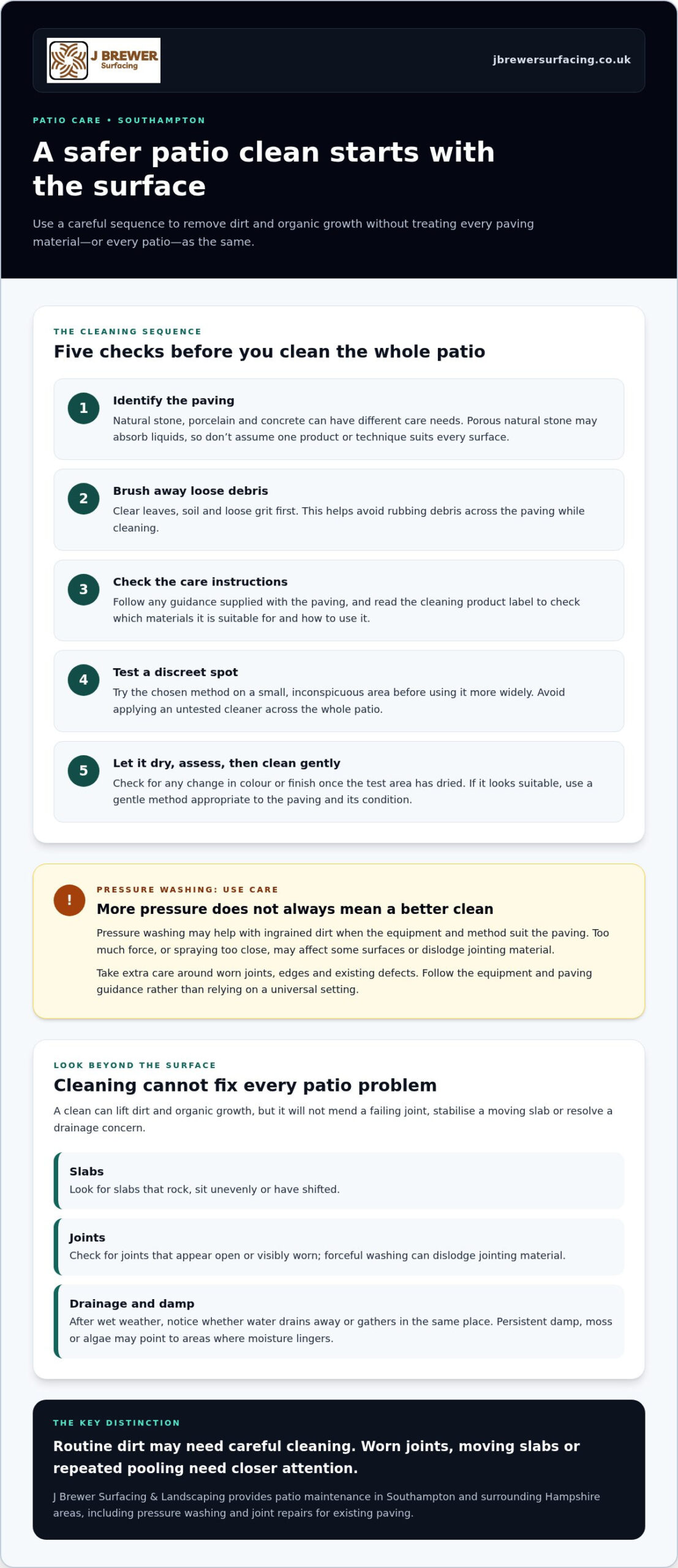
A careful clean starts with identifying the surface, not reaching for the strongest product or pressure setting. For patio maintenance Southampton homeowners can approach methodically, follow a simple sequence: clear loose debris, identify the paving, test your chosen method on a small, inconspicuous area, then clean gently. The Royal Horticultural Society also recommends removing dirt and algae from paving and patios as part of garden care.
Brush away leaves, soil and loose grit first. This reduces the chance of rubbing debris across the surface as you clean. Check any care guidance supplied with the paving, and read the cleaning product label for suitable materials and instructions. Try the method in a discreet spot and let the area dry. You can then assess any change in colour or finish before treating the full patio.
Which cleaning approach suits natural stone, porcelain and concrete?
Begin with gentle, surface-appropriate cleaning, but don’t assume the same product or technique suits every paving type. Porous natural stone may absorb liquids and needs careful product selection, while porcelain and concrete can have different surface finishes and care requirements. Follow the paving and product instructions, and avoid applying an untested cleaner across the whole area. The right approach depends on the material and its condition.
For routine dirt, clearing debris and using a suitable gentle cleaning method may be enough. Stubborn staining or extensive organic growth can call for a more considered approach, particularly if the paving is delicate, weathered or previously treated. If you’re uncertain about the material, avoid experimenting with strong cleaners. Match cleaning advice to the surface rather than judging by appearance alone.
Is pressure washing suitable for patio maintenance?
Pressure washing can help remove ingrained dirt when the equipment and method are appropriate for the paving. Too much force, or directing the spray too close, may affect some surfaces or dislodge jointing material. Take care around worn joints, edges and existing defects, and follow the equipment and paving guidance rather than relying on a universal setting. For a deep clean, suitable equipment and knowledge of the surface can help prevent a cleaning task from becoming a repair.
For straightforward upkeep, careful DIY cleaning may be sufficient. For ingrained grime or a surface that needs more attention, professional pressure washing can be a practical option. J Brewer Surfacing & Landscaping provides patio maintenance, including pressure washing and joint repairs, in Southampton and surrounding Hampshire areas. Learn more about professional patio maintenance.
Patio Joints, Slabs and Drainage: Spotting Maintenance Problems Early
A surface clean can lift dirt and organic growth, but it won’t mend a joint that’s breaking down or stabilise a slab that moves underfoot. During patio maintenance Southampton homeowners should distinguish marks on the paving from changes to its structure. Staining may be cosmetic; missing joint material, widening gaps or a rocking slab deserve a closer look.
Keep a simple record of anything that concerns you. Note where it is, take a photograph and check whether it changes after wet weather or regular use. This won’t identify the cause, but it can help show whether an issue is isolated or recurring. Avoid assuming that one visible symptom points to a particular repair: paving material, joint type and the surrounding area all matter.
What are the signs that patio joints need attention?
Look for joint material that’s missing, crumbling or visibly pulled away, as well as gaps that appear wider than those around them. Weeds growing between slabs can indicate an opening where seeds have taken hold, but they don’t prove why the gap is there or what repair it needs. Surface dirt, by contrast, generally sits on the paving and may change with careful cleaning.
Check several joints around the affected area rather than judging one spot in isolation. If the gaps are spreading, or material continues to break away, cleaning alone is unlikely to address the visible wear. The right patio joint repair in Hampshire depends on the paving and existing jointing, so avoid filling gaps with an unsuitable material as a quick fix.
When could a loose slab or standing water need more than cleaning?
A slab that rocks or sits noticeably out of line can make walking and placing garden furniture less comfortable. It may also create an uneven transition beside neighbouring paving. Don’t treat pressure washing or surface cleaning as a remedy for movement. Note which slabs are affected and whether the unevenness seems to change.
Water that repeatedly pools in the same place after rain is another reason to look beyond appearance. The patio may need its surface falls or drainage conditions checked, but a puddle alone doesn’t establish the cause. Record where water gathers and whether it remains after surrounding areas have drained.
Stable slabs and sound joints help make a patio more comfortable and dependable for everyday use. If visible wear needs more than routine care, J Brewer Surfacing & Landscaping provides patio maintenance in Southampton and surrounding Hampshire areas, including patio joint repairs and restoration of existing paving. The work should be matched to the paving and the condition of the affected area.
A Simple Patio Maintenance Routine for Southampton Gardens
A repeatable routine needn’t be complicated. Clear loose debris, inspect the paving and joints, then clean the surface in a way that suits its material and condition. Check the patio after prolonged wet weather or heavy garden use, when leaves may have gathered, joints may be more noticeable or water may have pooled. Let what you observe guide the next step rather than relying on a rigid timetable.
What can homeowners include in seasonal patio checks?
Remove leaves, soil and other loose debris before they become trapped against the paving or in its joints. Pay particular attention to shaded corners and areas near planting, where dampness, surface growth or slippery patches may be easier to miss. Then check for open or crumbling joints, slabs that feel unstable underfoot, and water that repeatedly gathers in the same place.
Keeping a note or photograph of any change can help you distinguish a one-off patch of dirt from a developing concern. If the patio looks sound, routine debris clearing and suitable cleaning may be all that’s needed. Avoid using a forceful method or untested product simply to make the paving look brighter; care should remain appropriate to the surface.
Which patio maintenance jobs are better left to a specialist?
Some jobs call for more than ordinary upkeep. Recurring slab movement, widespread joint deterioration or persistent pooling may need experienced assessment, as cleaning alone won’t resolve those visible defects. Likewise, if you’re unsure how a product or cleaning method may affect the paving, pause before applying it across the patio. Specialist cleaning can be useful where the surface material or its condition makes a DIY approach uncertain.
Not every stain or weed calls for professional maintenance. A small amount of loose debris or an isolated weed can often be dealt with as part of normal garden care. The distinction is whether the issue keeps returning, affects safe and comfortable use, or points to wear in the paving or joints. That judgement helps you focus effort where it can make a practical difference.
J Brewer Surfacing & Landscaping provides patio maintenance in Southampton and surrounding Hampshire areas, including pressure washing, joint repairs and restoration of existing paving. If routine checks have revealed worn joints or a patio that needs more than ordinary cleaning, explore patio maintenance support in Southampton.
Professional Patio Maintenance in Southampton: When to Call J Brewer
Routine care can keep a patio presentable: brush away leaves and loose debris, clean the surface using a suitable method, and keep an eye on joints and slabs. Professional maintenance is useful when the job needs more than ordinary cleaning, such as ingrained dirt across existing paving or joint material that’s visibly worn or damaged. The right work depends on the paving material, its condition and what you want to improve.
What can professional patio maintenance address?
J Brewer Surfacing & Landscaping provides patio maintenance in Southampton and surrounding Hampshire areas, including pressure washing, joint repairs and restoration of existing paving. Pressure washing can help address built-up dirt where it’s appropriate for the surface, while joint repairs focus on worn or damaged areas that a clean alone won’t fix.
These are different tasks, and a patio may need one, both or neither. Pressure washing isn’t a remedy for unstable slabs or deteriorated joints, and repairs need to suit the paving and the condition of the existing surface. Restoration can refresh existing paving, with the approach guided by its material and wear.
For homeowners, the useful distinction is whether the concern is mainly surface dirt or a visible defect. Occasional leaves or a small area of staining may be manageable as part of ordinary upkeep. Repeatedly failing joints, widespread wear or a surface that remains difficult to clean may benefit from experienced attention, so the work can be matched to the patio rather than treated as a one-size-fits-all job.
How to prepare for a patio maintenance discussion
A few clear details can help explain what your patio needs. Note the paving type if you know it, point out the affected sections and describe how long the issue has been present or whether it changes after wet weather or use. Photos can help show the location and extent of staining, loose slabs or worn joints.
It’s also useful to mention how the garden is accessed and used, whether damp patches or pooling recur, and what cleaning you’ve already tried. You don’t need to diagnose the cause. Sharing what you’ve observed gives the patio maintenance discussion a practical starting point and keeps attention on the result you’re hoping to achieve.
If an existing patio needs more than routine care, discuss patio maintenance for your Southampton property with J Brewer Surfacing & Landscaping.
Keep Your Patio Ready for Everyday Use
Consistent attention can help Southampton paving stay attractive and comfortable underfoot. Clear debris and clean according to the surface, then watch for loose slabs, worn joints or water that repeatedly pools. These signs call for more than cosmetic cleaning, while ordinary dirt or isolated weeds may be handled through routine garden care.
With patio maintenance Southampton homeowners can take a measured approach: manage straightforward upkeep yourself and seek experienced help when cleaning won’t address visible wear. J Brewer Surfacing & Landscaping provides patio maintenance in Southampton and surrounding Hampshire areas, including pressure washing and joint repairs for existing paving.
If your patio needs a closer look, discuss patio maintenance for your Southampton property. J Brewer Surfacing & Landscaping also serves Winchester, Gosport, Fareham, Portsmouth, Romsey and Whiteley. Get in touch to discuss patio maintenance for your outdoor space.
Frequently Asked Questions
How often should I clean my patio in Southampton?
Clean your patio when it needs attention rather than following a fixed timetable. How quickly it gets dirty depends on the paving material, shade, garden debris and how often the area is used. Remove loose leaves and dirt as part of routine upkeep, then arrange a deeper clean only when the surface needs it. Choose a method that suits the paving, and check regularly for damp patches, growth or changes to the joints.
Can pressure washing damage patio slabs or joints?
Yes, pressure washing can damage some surfaces or disturb joints if the force, distance or technique isn’t suitable. Check the paving guidance and equipment instructions, and test a small, discreet area before cleaning more widely. Take extra care around joints that are already worn. If you’re uncertain about the paving material or its condition, professional pressure washing is an option, with the approach matched to the patio.
What is the best way to remove moss and algae from patio paving?
Start by identifying the paving material, then use a compatible cleaning method and follow the product instructions. Avoid assuming one treatment suits every patio. Shade, persistent dampness and trapped organic debris can contribute to recurring growth, so clear leaves and check whether water drains away as expected. Moss and algae can make paving slippery, so take care underfoot while cleaning and avoid methods that could damage the surface or joints.
How do I know if my patio joints need repairing?
Missing, crumbling or visibly open joint material is a reason to inspect the area more closely. Weeds may grow where gaps are present, but they don’t establish why the gap has formed or what repair is needed. If joint deterioration is widespread, or nearby slabs move underfoot, cleaning or pulling weeds won’t resolve the underlying concern. A professional assessment can help determine whether patio joint repairs or other attention may be suitable.
Is it safe to use bleach or patio cleaner on natural stone?
It depends on the stone and the cleaner’s formulation, so don’t assume a product suitable for one paving type is safe for another. Follow both the paving care guidance and the cleaner’s instructions, and test an inconspicuous spot before treating a larger area. Bleach isn’t a universal solution for natural stone. If you can’t establish whether a product is compatible, avoid using it and seek specialist advice.
What should I do if patio slabs are loose or water keeps pooling?
Treat loose slabs and recurring pooling as concerns beyond ordinary surface dirt. If a slab feels unstable, limit use of that area to reduce the chance of a trip, and note which slabs move. After rain, observe where water gathers and whether the pooling recurs. These signs don’t identify the cause on their own, but professional assessment can help establish whether patio joint repairs or other attention may be suitable.
When should I arrange professional patio maintenance in Southampton?
Consider professional help if cleaning hasn’t improved the surface, joints are visibly deteriorated, slabs move or you’re unsure whether a DIY method could harm the paving. J Brewer Surfacing & Landscaping provides patio maintenance in Southampton and surrounding Hampshire areas, including pressure washing and joint repairs. The company also serves Winchester, Gosport, Fareham, Portsmouth, Romsey and Whiteley. The appropriate work depends on the patio’s material, visible condition and the result you want.