
Resin Bound Driveway Southampton: 2026 Homeowner Guide
A flawless resin surface doesn’t succeed or fail because of the decorative aggregate on top; it lives or dies by the unseen groundworks beneath it. If you’re dealing with chronic water pooling on cracked concrete and exploring a resin bound driveway Southampton weather won’t undermine, it’s easy to feel cautious. Between distinguishing porous bound systems from impermeable bonded coatings, and worrying about rogue builders who scrimp on excavation depth, homeowners often struggle to find clear, practical guidance.
You deserve the peace of mind that comes with a robust, attractive installation tailored precisely to your property. In this 2026 guide, you’ll discover how quality resin bound surfacing delivers a durable, SuDS-compliant, and striking frontage that prevents surface run-off entirely. We’ll examine the critical foundation layers required for long-term stability, clarify Southampton council drainage rules, and share how to identify a conscientious local tradesperson who refuses to cut corners on craftsmanship.
Key Takeaways
- Understand how an expertly installed resin bound driveway Southampton properties benefit from achieves complete SuDS compliance, filtering heavy coastal rainfall naturally without standard planning permission delays.
- Discover the vital engineering role of open-graded MOT Type 3 sub-bases, ensuring your driveway resists subsidence, shifting, and frost heave over decades of use.
- Distinguish between fully encapsulated, permeable resin bound systems and superficial resin bonded gravel to avoid premature surface failure and loose stone scatter.
- Learn the essential vetting criteria for choosing conscientious local tradespeople who deliver immaculate hand-trowelled finishes and uncompromising ground preparation.
What Is a Resin Bound Driveway and How Does It Work?
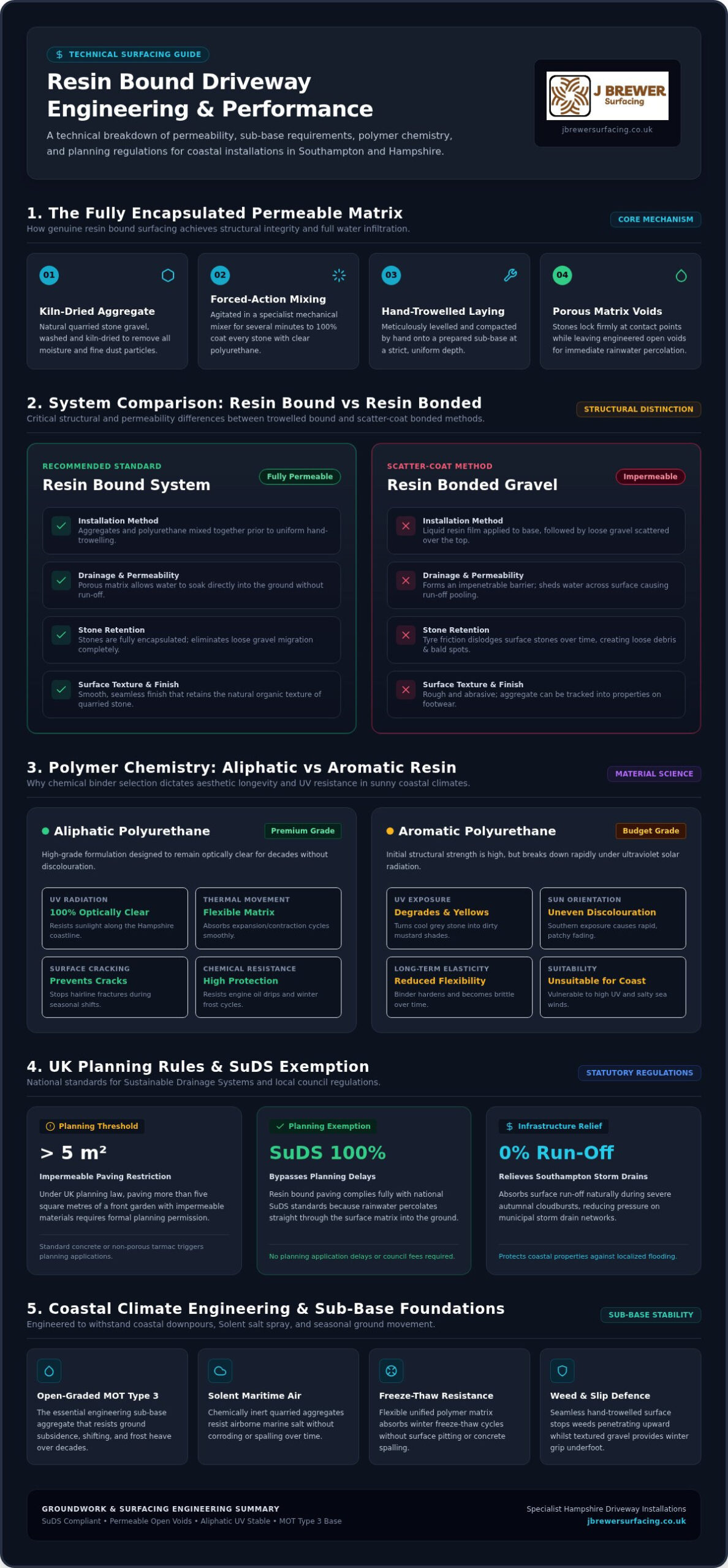
At its core, resin bound surfacing combines kiln-dried natural aggregates with a heavy-duty, clear polyurethane binder. Rather than simply applying glue and scattering stone across a driveway, tradespeople combine the gravel and resin inside a mechanical forced-action mixer for several minutes. This rigorous agitation coats every individual pebble completely. The wet mixture is then unloaded and meticulously hand-trowelled onto a prepared base at a uniform depth. By locking stones together at their contact points while leaving open voids between them, a true Resin-bound paving system functions as a fully permeable matrix that allows rainwater to drain straight into the ground. The result is a smooth, seamless finish that eliminates loose stone migration entirely while preserving the organic texture of quarried stone.
Resin Bound vs Resin Bonded: Essential Distinctions
Homeowners often confuse resin bound systems with resin bonded coatings, yet their structural performance could not be more different. Resin bonded paving is a scatter-coat method where liquid resin is film-applied onto a non-porous sub-base before dry gravel is cast loose over the top. Because the resin forms an impenetrable barrier underneath, bonded surfaces remain completely impermeable and shed water across the surface rather than absorbing it. Over time, friction from vehicle tyres dislodges these surface-bonded stones, creating loose debris and bald patches. For a long-lasting resin bound driveway Southampton properties demand, the trowelled, fully porous system remains the standard because it manages coastal downpours effortlessly and holds aggregate permanently in place.
The Chemistry of UV-Stable Polyurethane Resins
The secret to a pristine installation rests inside the polymer chemistry. Installers generally choose between two core formulations: cheaper aromatic resins and premium aliphatic varieties. Aromatic resins are structurally strong initially, but they break down under ultraviolet radiation. Along the sunny Hampshire coastline, southern exposure causes aromatic binders to yellow rapidly, turning cool greys into dirty shades of mustard. Conscientious contractors insist on using aliphatic polyurethane instead. This high-grade resin remains optically clear for decades, resisting UV degradation, engine oil drips, and winter frost cycles. The flexible polymer matrix accommodates seasonal ground expansion and contraction smoothly, preventing hairline surface cracking as seasonal temperatures fluctuate.
Why Resin Bound Surfacing Thrives in Southampton and Coastal Hampshire
Southampton’s maritime climate brings frequent coastal downpours and salt-laden sea air blowing inland from the Solent. For local homeowners, managing surface water is a practical necessity rather than a design afterthought. Choosing an expertly engineered resin bound driveway Southampton properties benefit from resolves persistent drainage problems, capturing rainwater instantly through its permeable stone matrix before puddles can form. The chemically inert aggregate also withstands marine air without corroding, providing a resilient exterior frontage that stays immaculate across every season.
SuDS Compliance and Local Planning Exemptions
Under UK planning rules, paving more than five square metres of a front garden with impermeable materials requires formal planning permission. Resin bound paving bypasses this administrative delay because water percolates straight into the ground. Aligned with the National standards for SuDS, permeable installations allow surface run-off to soak away naturally. This prevents driveway pooling and significantly relieves pressure on Southampton City Council storm drains during severe autumnal cloudbursts. Homeowners planning an exterior update can consult with experienced Hampshire driveway specialists to design a fully compliant layout that respects local drainage requirements.
Resistance to Coastal Moisture, Frost, and Weeds
Coastal moisture and sub-zero winter temperatures quickly degrade traditional paving. Plain concrete often spalls when trapped moisture expands in cold weather, while damp asphalt can develop surface pitting. By contrast, a resin bound matrix cures into a unified, flexible layer that absorbs freeze-thaw cycles without cracking. The seamless hand-trowelled finish stops weed roots from penetrating upward from the sub-base, while the textured aggregate provides dependable traction underfoot during frosty winter mornings.
Sub-Base Engineering: What Lies Beneath a Long-Lasting Southampton Driveway
A driveway surface is only as dependable as the foundation carrying it. While the decorative stone matrix commands attention, enduring strength relies on deep structural groundwork. Standard driveway builds often use MOT Type 1 aggregate, but this dense material contains fine dust that blocks drainage channels. Installing a permeable resin bound driveway Southampton vehicles won’t sink into requires an open-graded MOT Type 3 sub-base, which contains zero fines and allows trapped water to escape freely. Above this compacted stone sits an open-graded binder asphalt layer, engineered to distribute vehicle wheel loads evenly across the profile. Across Hampshire, where heavy clay soils swell during wet winters and shrink throughout hot summers, laying a non-woven geotextile membrane beneath the sub-base is essential. It prevents clay migration from contaminating the stone layers and triggering sinkage, meeting the strict ground preparation guidance established by FeRFA standards.
New Excavation vs Overlaying Existing Driveways
Overlaying an existing concrete or tarmac surface can save time, provided the foundation remains structurally sound. Solid, uncracked tarmac and clean, monolithic concrete make acceptable bases once power-washed and primed. Never apply resin bound gravel directly over block paving. Sand joints shift under vehicle tyres, causing the overlying resin to crack along every seam. Damaged concrete requires crack stitching, joint chasing, and thorough degreasing before any resin work begins.
Edge Restraints and Structural Edging Details
Because resin screed must be compacted firmly against a solid vertical stop, rigid edge restraints are vital. Exposed outer edges will crumble without protection from heavy turning tyres. Homeowners can select several attractive borders to complement their design:
- Aluminium edging strips: Discreet profiles that provide an ultra-clean, minimalist transition between surfaces.
- Contrasting block pavers: Charcoal or rustic clay setts that frame the main resin aggregate with distinctive visual structure.
- Natural stone kerbing: Heavy-duty granite or sandstone edging suited to period properties and sweeping drive entrances.
Whichever styling you prefer, contractors must bed all borders into concrete with proper rear haunching. This solid concrete support prevents border movement under daily vehicle traffic, preserving sharp perimeter lines permanently.
The Professional Installation Process: Step-by-Step Excellence
Precision craftsmanship turns quality materials into an enduring driveway. Rather than an afternoon makeover, a dependable resin bound driveway Southampton installation follows a methodical, multi-stage construction sequence. Every stage demands rigorous attention, from initial depth excavations to the final trowelled pass across the curing aggregate. Skipping even minor preparatory checks compromises structural longevity, which is why conscientious contractors manage each installation phase with hands-on oversight.
Site Preparation, Compaction, and Base Construction
A ground-up installation begins by digging out the existing turf, soil, or broken hardstanding. Contractors excavate down roughly 200mm to 250mm, creating sufficient headroom for the structural layers. After laying the geotextile membrane, teams install open-graded MOT Type 3 stone and compact it thoroughly using heavy commercial vibration rollers to form an unyielding sub-grade platform. Next, workers lay an open-graded asphalt binder course to distribute heavy vehicular weight. Throughout this structural phase, installers carefully set fall gradients to direct extreme torrential surplus away from exterior house walls.
Mixing, Hand-Trowelling, and Curing Guidelines
Once base asphalt cures completely, the surface dressing begins under strictly controlled conditions:
- Forced-action pan mixing: Standard free-fall cement mixers cannot generate the shearing force required to blend thick polyurethane resin. Specialized pan mixers run for an exact timed cycle, thoroughly enveloping each washed aggregate particle.
- Manual hand-trowelling: Installers float the wet blend by hand at an 18mm nominal thickness, using weighted steel trowels lubricated with smoothing agents to eliminate trowel drag lines and hollows.
- Anti-slip broadcast: Before the polymer sets, technicians lightly scatter ultra-fine crushed glass or round quartz sand across the top to maximise wet-weather grip.
Moisture ruins uncured polyurethane, so laying requires completely dry weather and surface temperatures between 10°C and 25°C. Pedestrians can safely walk across the cured stone after 12 to 24 hours, but passenger cars must stay off the driveway for a full 24 to 48 hours to prevent surface compression. For flawless groundwork and reliable execution across Hampshire, request a driveway consultation with J Brewer Surfacing & Landscaping to inspect your property’s levels.
Selecting Aggregate Blends and Choosing a Trusted Southampton Contractor
Selecting the right aggregate blend transforms a property’s kerb appeal while providing a comfortable, resilient surface underfoot. Professional mixes generally combine 2mm to 5mm rounded gravels with angular 1mm to 3mm crushed stone. This precise gradation fills structural voids between larger stones without sacrificing water permeability, producing an interlocking finish that feels smooth under pushchairs and bare feet. When commissioning a resin bound driveway Southampton homeowners should demand physical aggregate sample boards to inspect stone colours against their brickwork under natural daylight.
Complementing Southampton Architecture with Bespoke Stone Blends
Southampton’s diverse architectural heritage calls for thoughtful colour choices. Period red-brick Edwardian homes in Highfield or Victorian villas in Polygon pair beautifully with warm golden quartzes, chestnuts, and autumnal ambers that accentuate heritage masonry. Modern waterfront builds in Ocean Village look sharp against contemporary silver granites, sleek flints, and contrasting charcoal aggregate borders. Custom motifs, curved access ramps, and contrasting block paving margins can easily be integrated to define distinct parking zones with bespoke elegance.
Contractor Due Diligence Checklist: Questions to Ask
Because the resin sector attracts rogue operators who cut corners on excavation depths and substitute inferior non-UV glues, thorough contractor vetting is non-negotiable. Before signing any contract, insist on direct answers to these vital questions:
- Resin chemistry: Will you state in writing that 100% UV-stable aliphatic polyurethane resin will be used across the entire surface?
- Groundwork depth: Does your quotation detail full excavation down to undisturbed ground alongside a permeable MOT Type 3 base?
- Local credentials: Can you provide verifiable local references and driveable past project addresses across Southampton, Romsey, or Winchester?
- Contractor liability: Do you carry dedicated public liability insurance specifically covering driveway groundworks and mechanical plant operation?
Skilled ground preparation, clean edging, and independent master craftsmanship make all the difference to your investment. For transparent advice and bespoke design guidance across Hampshire, reach out to J Brewer Surfacing & Landscaping to arrange an in-person site survey and discuss your property’s exterior transformation.
Transform Your Property with Enduring Craftsmanship
A beautiful driveway should deliver decades of reliable service rather than seasonal maintenance headaches. Achieving a pristine resin bound driveway Southampton homeowners can take pride in comes down to three non-negotiable fundamentals: open-graded MOT Type 3 ground preparation, 100% UV-stable aliphatic resin, and securely haunched edge restraints. When these structural layers are engineered correctly, your surface manages Hampshire coastal downpours naturally while providing an immaculate, weed-free welcome home.
As an independent Hampshire specialist managed directly by tradesman James Brewer, J Brewer Surfacing & Landscaping provides comprehensive groundwork and flawless hand-trowelled finishes across Southampton, Winchester, Fareham, and Romsey. Every installation benefits from transparent technical guidance, durable materials, and meticulous personal oversight. Discuss your Southampton driveway project with J Brewer Surfacing & Landscaping today to create a bespoke, SuDS-compliant entrance built to endure.
Frequently Asked Questions
Do I need planning permission for a resin bound driveway in Southampton?
Generally, you won’t need planning permission for a resin bound driveway Southampton properties install, provided the surface and sub-base remain fully permeable. Under UK permitted development rules, rainwater must drain naturally without discharging onto public highways. If your property fronts a classified road or requires a new dropped kerb crossover through Southampton City Council, you’ll need separate highway approvals, but standard residential replacements bypass formal planning control completely.
What is the practical lifespan of a professionally installed resin bound driveway?
A correctly engineered resin bound surface typically lasts between 15 and 25 years. Longevity depends directly on sub-base preparation, proper aggregate encapsulation, and using UV-stable aliphatic polyurethane. Because the stone is thoroughly bonded rather than loose, it doesn’t scatter or rut under daily vehicular turns. Routine sweeping and occasional light power washing keep the porous voids clear, ensuring the matrix stays structurally sound for decades.
Can an existing concrete or tarmac driveway in Hampshire be overlaid with resin?
Yes, solid tarmac or concrete driveways across Hampshire can often be overlaid, provided the existing slab is structurally sound and free from major cracking. Any existing cracks must be chased, stitched, and repaired, followed by deep pressure cleaning and specialised priming. Never overlay block paving, as moving sand joints will crack the resin above. A comprehensive site survey confirms whether an overlay or full excavation offers the best long-term value.
How do you clean and maintain a resin bound surface throughout the year?
Routine maintenance requires very little effort beyond regular sweeping with a stiff-bristled broom to clear decomposing leaves and surface grit. You can pressure wash the surface periodically using cold or lukewarm water, keeping the fan lance at least 200mm away to protect aggregate bonds. To treat occasional moss or algae in shaded areas, apply a gentle biodegradable wash rather than harsh acidic cleaners, which can harm the resin matrix.
Can a resin bound driveway withstand heavy family vehicles and everyday delivery vans?
Absolutely. When laid over an engineered base of open-graded MOT Type 3 aggregate and an asphalt binder course, a resin bound driveway easily supports heavy modern SUVs, multiple family cars, and delivery vans. The interlocked aggregate matrix distributes point loads evenly across the base without rutting. Provided the resin screed is hand-trowelled to an eighteen-millimetre depth, it handles daily vehicle manoeuvring and heavy turning tyres without scuffing or sinking.
Will a resin bound driveway turn yellow or discolour under direct sunlight?
It won’t discolour if your contractor installs high-grade aliphatic polyurethane resin. Cheaper aromatic binders react poorly to UV sunlight, turning yellowish or tea-stained within a few months of intense coastal sunshine. Aliphatic resins remain optically clear indefinitely, allowing natural stone colours to keep their original vibrancy. Professional Hampshire contractors only specify UV-stable aliphatic formulations so your chosen aggregate blend stays sharp and true over decades of weather exposure.
How long does a new resin bound driveway take to install and cure?
The top screed installation typically takes one to two days, though full excavation and ground preparation require several days beforehand. Once trowelled, polyurethane cures quickly in warm, dry weather. Pedestrians can walk across the surface within 12 to 24 hours, but passenger vehicles should remain off the driveway for at least 24 to 48 hours. This curing window allows the polymer bonds to achieve full structural tensile strength before carrying heavy loads.