
Natural Stone Patio Hampshire: Sandstone, Limestone or Porcelain?
The paving that looks best in a sample may not be the best choice for your garden. If you’re planning a natural stone patio in Hampshire, sandstone, limestone and porcelain can each create a distinctive finish, but they differ in appearance, variation and care requirements. Choosing on looks alone can leave you with a surface that doesn’t suit your daily routine or the way you use the space.
It can be difficult to compare options when product pages group slabs by colour or style rather than practical details. This guide explains how sandstone and limestone differ in appearance, how porcelain compares with natural stone, and what to check before you choose. Consider the patio’s exposure, drainage, foot traffic and relationship to the house and garden. With the site and your routine in mind, you can narrow the options and plan a patio that fits your Hampshire home.
Key Takeaways
- Choose patio paving to suit how you use the garden, its exposure and the level of upkeep you prefer, not appearance alone.
- Sandstone and limestone are natural stones with variation, while porcelain is manufactured. Compare actual samples and care instructions before deciding.
- For a natural stone patio Hampshire project, weigh the character you want against site conditions and household routines.
- View samples in the intended space at different times of day to see how their colour and finish work with your garden.
- Before installation, discuss site preparation, laying and jointing for your chosen material, along with how to care for the finished patio.
What to consider before choosing a natural stone patio in Hampshire
A patio should suit its garden, the way your household uses it and the look you want. A space for outdoor dining has different practical requirements from a quiet corner among planting, so start by deciding how you’ll use the finished area. For a natural stone patio Hampshire homeowners should consider those everyday needs alongside appearance, rather than choosing a slab by colour alone.
Natural stone paving is cut from quarried stone, while porcelain is manufactured. Both can create a considered finish, but they are different materials and shouldn’t be expected to look or behave in exactly the same way. Whichever you choose, preparation, laying and jointing are part of the project, not details to leave until after you’ve selected the surface. Ask how these elements will be handled for your site.
What counts as natural stone patio paving?
Sandstone and limestone are two natural stone options often considered for patios. Since each slab comes from natural material, colour, markings and surface character can vary, even within one stone type. That variation can give a patio depth and individuality, but a small sample may not represent every slab. The term flagstone is also used for paving stone, often sandstone, split into layers.
Don’t assume every stone type or finish will be suitable or available for your project. Ask what can be sourced, and consider how variation will look across the full paved area before settling on a choice.
Which garden details should shape the comparison?
Gardens across Hampshire differ in exposure and layout. One patio may be open to direct sun, while another is shaded by the house or trees. Drainage, nearby planting and the way water moves across the site also vary. Assess the space you have rather than relying on broad assumptions about local conditions.
- Think about use: Will the patio mainly be used for dining, walking between garden areas or relaxing?
- Check the setting: Note sunny and shaded areas, drainage, and nearby trees or borders.
- Plan the transitions: Consider how paving will meet the house, lawn, steps or existing surfaces.
- View samples outdoors: Look at them in the intended position at different times of day. Daylight and surrounding colours can change how a finish appears.
These checks make it easier to compare materials in context. An installer can also discuss the site and intended use with you, then consider how the paving, installation approach and future maintenance fit together.
Sandstone, limestone and porcelain: how patio materials differ
Material names are a useful starting point, but they don’t tell you everything about how a surface will look or what care it needs. Sandstone and limestone are quarried natural stones; porcelain is manufactured. Each can create a distinctive patio, but the specific product, finish, installation and site conditions all affect its suitability and upkeep.
Appearance: Sandstone often has visible texture and variation, while limestone may have a different, sometimes more subtle pattern. Porcelain can look more consistent across slabs, depending on the product.
Natural variation: Colour, markings and surface character can vary between natural stone slabs. Manufactured porcelain tends to have a more controlled appearance, although its design and finish vary by product.
Cleaning: Care requirements depend on the material and its specification. Check the supplier’s instructions for suitable cleaning methods and ongoing care rather than assuming one approach works for every surface.
Finish and suitability: Surface texture and finish affect the look and feel of paving. Check the product information for its intended use and conditions, particularly if the patio will be shaded or exposed to moisture.
How do sandstone and limestone differ in appearance and care?
Sandstone and limestone have different visual characters, but neither is a single, uniform-looking option. A particular sandstone may differ in colour and markings from another, while limestone also varies by source and finish. That natural variation is part of the appeal, though it means the installed patio may not match a small sample exactly.
Ask to see samples of the material under consideration, and compare several pieces where possible. Check the supplier’s cleaning and maintenance guidance, since care can depend on the specific stone and finish. A natural stone patio Hampshire homeowners choose should work as a complete surface and suit the garden’s overall design.
How does porcelain compare with natural stone paving?
Porcelain is a manufactured alternative, not a type of natural stone. Its controlled production can give slabs a more consistent colour or pattern, which may suit a coordinated look. Natural stone varies from slab to slab, so the finished area can feel less uniform. Neither quality is automatically better. The choice depends on the effect you prefer.
Don’t assume porcelain always needs less care, or that natural stone is always more suitable outdoors. Product specifications and surface finishes differ, and exposure, drainage and installation matter too. Before deciding, ask how the specific paving should be cleaned and what preparation and jointing it requires. You can also review patio installation and maintenance information while planning the work.
Which patio paving suits a Hampshire garden best?
There’s no single best paving material for every Hampshire property. A patio in Southampton, Winchester or elsewhere in the county should suit its own setting and use, rather than assumptions that every garden faces the same conditions. Compare four things separately: the look you want, the care you’re comfortable with, how you’ll use the space and the site’s exposure. A natural stone patio Hampshire homeowners choose should work in everyday life as well as in the overall garden design.
| Material | Potential advantages | Points to check |
|---|---|---|
| Sandstone | Natural variation can bring colour and surface character to a garden. | Slabs can vary. Check samples, finish-specific care advice and suitability for the intended use. |
| Limestone | Offers a different natural appearance, with variation between stone and finish. | Assess the actual colour and texture, and follow guidance for the selected product. |
| Porcelain | May suit a design that calls for a more consistent manufactured appearance. | Check the specific surface finish, cleaning guidance and suitability for the patio’s location. |
These are comparison points, not guarantees of performance. Product specification, finish, installation and site conditions all influence the result, so confirm the details for the paving you’re considering.
When might natural stone be the better fit?
Natural stone may appeal if you want variation and material character to shape the design. Consider how the chosen colour and texture will sit alongside the home’s brickwork, boundary walls, fencing and planting. Compare samples against existing garden colours rather than judging them against a neutral indoor background. The finished appearance also depends on the particular stone and finish, as well as how the paving is laid and jointed.
When might porcelain be worth comparing?
Porcelain is worth considering if you prefer a more consistent, manufactured look across the paved area. That consistency may help create a coordinated design, but it doesn’t establish whether a particular slab suits your site. Check its stated finish, intended use and care guidance, then consider the patio’s exposure and how it connects with the house and garden. Compare specific products: neither porcelain nor natural stone is automatically right for every household.
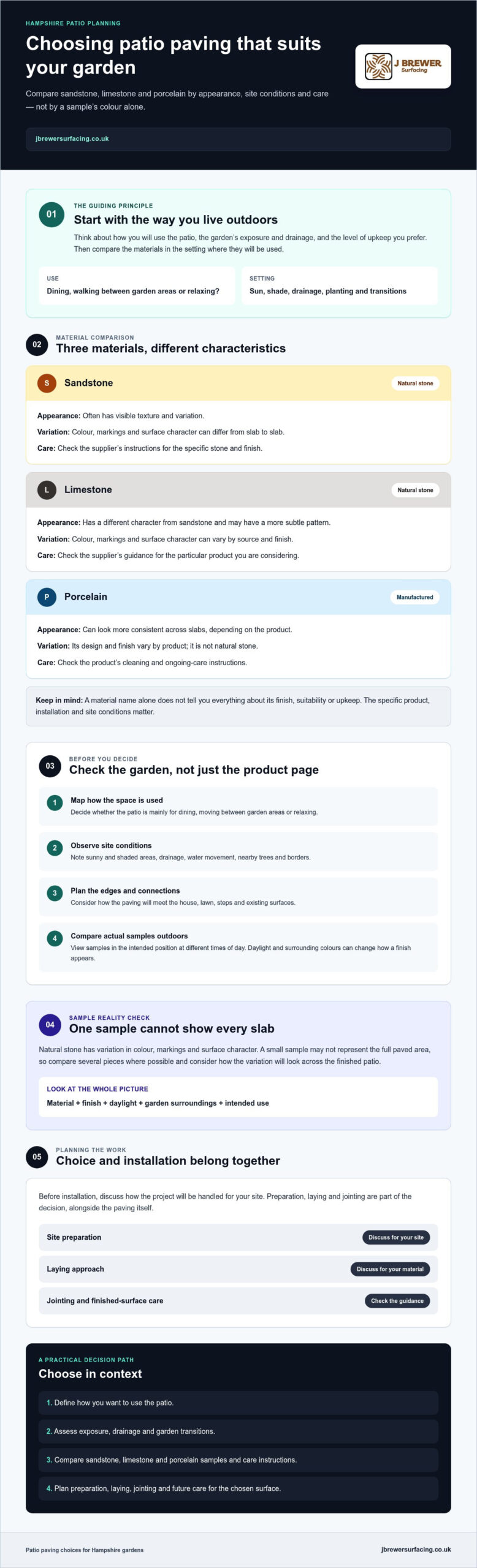
How to assess samples and site conditions before choosing patio paving
A sample helps you picture the finished patio, but it can’t show on its own whether the material and layout suit your garden. Use this five-step check to compare paving in context and give an installer clear details to discuss.
- 1. Define how you’ll use the space. Note whether it’s mainly for outdoor dining, a route between the house and garden, or a place to sit among planting. Consider how much foot traffic it will receive and what needs to fit on the paved area.
- 2. Inspect the site. Look at existing levels, where water runs or collects, and how easily materials and equipment can reach the garden. Note steps, narrow access points and changes in level that could affect preparation.
- 3. Compare samples outdoors. Place them beside the house, garden boundaries and existing outdoor finishes. If possible, compare more than one natural stone slab so you can judge the range of colour and markings, not just one piece.
- 4. Check product care. Ask for cleaning instructions and details about the selected product’s surface finish. Consider whether the recommended routine fits the time and effort you’re prepared to spend on patio maintenance.
- 5. Discuss installation. Ask how the installer plans to prepare the site and set out the paving, and how the layout will meet doors, paths, lawns, steps or existing surfaces. Clarify who is responsible for the installation and request maintenance advice for the chosen material.
What should you check when viewing patio samples?
View samples where the patio is planned and look at them at different times of day. Daylight and nearby colours can change how paving appears, so compare it with the brickwork, fences, planting and adjoining surfaces it will sit beside. For a natural stone patio Hampshire project, ask whether the sample reflects the selected stone and finish, and what variation to expect across the whole area.
What should you ask about the Hampshire patio site?
Raise practical details early, including levels, drainage and water run-off, access, preparation, and transitions to adjoining areas. Ask how these will affect the proposed layout and installation approach rather than assuming the same method suits every garden. Clear answers help you weigh the look of a material against the work needed to fit it to the site.
Once you’ve noted your preferred look and questions about the site, you can discuss your patio project with an installer. A focused conversation can connect your paving choice with the garden’s use, installation requirements and future care.
Planning a natural stone patio in Hampshire: from choice to installation
Once you’ve shortlisted a material, check that your preferred paving works with the garden and the way you plan to use it. A considered plan connects the look of the slabs with practical decisions about layout, access, preparation and aftercare. Discussing these points before work begins helps clarify what the project involves and how to care for the finished patio.
What should a patio installation discussion cover?
Explain how you intend to use the space and where you want the patio to lead, such as a doorway, path, lawn or another paved area. Share your preferred paving choice and ask which stone types and finishes can be sourced for the project. Consider the final selection alongside the garden’s levels, access and relevant ground conditions.
Before agreeing the work, ask how the proposed layout will meet the house and adjoining surfaces, and how site preparation, levels and drainage will be addressed. Discuss the laying and jointing approach for the specific material and site, as these details contribute to the completed surface. Confirm the project scope and request care instructions for your chosen paving, so you know how to look after it after installation.
How can J Brewer support a Hampshire patio project?
J Brewer Surfacing & Landscaping installs custom garden patios using natural stone and paving slabs in Hampshire and surrounding areas. The material, garden conditions and intended use all inform the project discussion. The company’s local service area includes Southampton, Winchester, Gosport, Fareham, Portsmouth, Romsey and Whiteley. Confirm coverage and ask which stone types and finishes can be sourced for your installation.
Planning doesn’t end when the paving is laid. Patio maintenance, joint repairs and pressure washing are also available, although suitable care depends on the paving and its condition. Ask what maintenance is appropriate for your selected surface rather than assuming every stone or finish should be treated in the same way. Connecting installation decisions with practical aftercare helps you plan for the patio as part of the garden.
If you’re considering a natural stone patio Hampshire project, you can discuss a patio project with J Brewer. Talk through material, layout, site preparation and care, whether you’re planning a new patio or considering maintenance for an existing one.
Make a confident choice for your Hampshire patio
Sandstone and limestone bring natural variation, while porcelain offers a manufactured, more consistent appearance. The right option depends on the finish you prefer, how you’ll use the space, the garden’s exposure and the care recommended for the specific paving. Samples viewed outdoors, alongside a discussion of levels, drainage and installation, can help you choose paving that suits your home and routine.
A well-planned natural stone patio Hampshire project involves more than selecting slabs. Preparation, laying, jointing and aftercare all contribute to the finished result, so ask how these details will be handled for your site and chosen material.
J Brewer installs garden patios using natural stone and paving slabs, and provides patio maintenance and joint repairs. Its local service area includes Southampton, Winchester, Gosport, Fareham, Portsmouth, Romsey and Whiteley. Discuss your Hampshire patio project with J Brewer to talk through the material, site and care requirements before deciding how to proceed.
Frequently Asked Questions
Is natural stone paving suitable for a patio in Hampshire?
Natural stone can suit a Hampshire patio if the selected stone, finish and installation are appropriate for the garden. Conditions vary between properties, so consider the patio’s exposure, drainage, levels and intended use rather than making assumptions based on location alone. For a natural stone patio Hampshire homeowners should also check the supplier’s care advice and discuss site preparation with the installer before choosing a material.
What is the difference between sandstone and limestone paving?
Sandstone and limestone are both quarried natural stones, but they have different visual characters and patterns. Colour, markings and surface texture can vary between stones and individual slabs, so neither material has one guaranteed appearance. Compare samples from the stone you’re considering, ideally viewing more than one piece outdoors. Ask the supplier for care instructions for the selected stone and finish, as maintenance guidance can differ between products.
Is porcelain paving better than natural stone for a patio?
Not necessarily. Porcelain is manufactured and may appeal if you prefer a more consistent appearance, while natural stone offers variation in colour and surface character. Neither is automatically better or easier to maintain for every garden. Compare specific products, including their surface finishes, intended use and cleaning guidance. Your choice should also account for the site, how you plan to use the patio and the installation approach recommended for that paving.
How do I choose a finish for natural stone patio paving?
Start with the appearance and feel you want, then check that the finish suits the patio’s location and intended use. View samples outdoors beside the house, boundaries and planting, and compare them in different daylight. Natural stone can vary, so look at several slabs if possible rather than relying on one sample. Ask the supplier to explain the selected finish and provide its care guidance before deciding.
Does a natural stone patio need regular maintenance?
Natural stone paving needs care, although the right routine depends on the specific stone, finish, installation and site conditions. Follow the supplier’s cleaning guidance and check which products or methods are suitable before treating the surface. Also keep an eye on the joints and the general condition of the patio. J Brewer Surfacing & Landscaping provides patio maintenance and joint repairs, alongside pressure washing for existing paving.
What should I check before choosing patio paving for my garden?
Consider how you’ll use the patio, how much sun or shade it receives, drainage and nearby planting. Check the levels, access and how the paving will meet doors, paths, steps, the lawn or existing surfaces. Then compare samples in the garden and ask about the material’s care instructions. Discussing these details with an installer helps connect the appearance you want with the practical requirements of your site.
Can a patio installer help me choose between sandstone and porcelain?
Yes. An installer can discuss how your intended use, site conditions, preferred appearance and maintenance expectations relate to the paving options. J Brewer Surfacing & Landscaping installs patios using natural stone and paving slabs. Its local service area includes Southampton, Winchester, Gosport, Fareham, Portsmouth, Romsey and Whiteley. Ask about coverage and which materials and finishes can be sourced for your project.