
Patio Installation Hampshire: A Practical Guide to Design, Materials and Installation
The paving you choose isn’t the only decision that shapes a successful patio. The garden’s layout, ground conditions and drainage matter just as much. If you’re considering patio installation Hampshire, you’ll want a surface that suits your home and household and works well for everyday use.
Start by looking at the whole space before settling on a material or design. A carefully planned patio can feel like a natural extension of your home, whether you want somewhere to dine, relax or connect different parts of the garden. What goes beneath the paving is just as important as the finish you see.
This guide compares natural stone and paving slabs, explains the design and ground-preparation decisions to consider, and outlines what to discuss during installation. You’ll also find practical points for comparing Hampshire contractors, so you can understand what a site-specific quote should cover and make an informed decision.
Key Takeaways
- Start with how you’ll use the patio, then plan its position and size around your household, garden and routes through the space.
- Compare natural stone and paving slabs by appearance, surface feel, cleaning needs and design flexibility.
- Understand the usual stages of patio installation Hampshire, from assessing the site and preparing the ground to laying the paving and checking the finished surface.
- Consider site levels and water management early, as both can affect a practical layout.
- When comparing installers, ask for a clear written scope covering materials, preparation, drainage, access and how changes will be handled.
Planning patio installation in Hampshire: start with how you will use the space
The right patio depends on your garden, household and daily routines, not simply on the paving you like. A space for weekday meals may work best with a convenient connection to the kitchen, while a garden used for entertaining might need room for people to gather and move around. If relaxing is the priority, look for a position with a balance of sun and shade. A patio can also create a useful link between the house, lawn and other parts of the garden.
A well-planned patio balances use, access, drainage and appearance. That is a practical starting point for patio installation Hampshire homeowners are considering, whatever the size or character of the garden. For a general introduction to what is a patio and the materials commonly associated with it, Wikipedia offers useful background. Your own plans should reflect the needs and conditions of your site.
What should a patio make possible in your garden?
Before comparing materials or requesting a quotation, decide what the paved area needs to accommodate. List your priorities, such as seating, dining, children’s play or a clear route through the garden. Think about household routines too: how many people usually use the space, whether furniture will stay in place, and how easily you want to move between the patio and the house.
These details help establish the patio’s useful size and position. A dining area near a frequently used door may suit everyday meals, while a separate seating spot could make a larger garden feel more inviting. Write down your essential needs and nice-to-haves before speaking to a contractor. That gives you a clear brief to discuss.
How do you assess the garden before choosing a layout?
Walk around the garden and note its boundaries, doors, existing planting, changes in level and any access constraints that could affect the work. Observe where sunlight and shade fall at different times of day. Decide whether established features should be retained or worked around. These observations can help the patio feel connected to the garden rather than imposed on it.
Consider drainage and surface water during planning, because the patio’s position and levels need to be considered together. Conditions and access can vary between properties across Hampshire, including in Southampton, Winchester, Gosport, Fareham, Portsmouth, Romsey and Whiteley. Don’t assume that one layout or installation approach will suit every site. If levels, ground conditions or the route for bringing materials into the garden are uncertain, arrange a site visit before agreeing the design and scope. A contractor can assess the space and discuss how its constraints should shape the plan.
Compare patio paving materials for appearance, upkeep and everyday use
Natural stone and other paving slabs can create different impressions, but neither category has one fixed appearance or feel. The right choice for patio installation Hampshire depends on the specific product, your garden and how you’ll use the surface. Compare samples in the setting where they’ll be laid, alongside the house, planting and existing hard surfaces.
Natural stone or paving slabs: what should you weigh up?
Natural stone has individual variation, so colour, markings and texture can differ between stones. Paving slabs are available in different formats and appearances, depending on the product, and can help create a more consistent or deliberately varied pattern. For a useful comparison, consider how each option looks as a complete surface rather than judging a single slab in isolation. Ask to view samples and check them in your garden’s light.
Appearance: Natural stone can bring variation in tone and markings. Other paving slabs may offer a more uniform look, depending on the product selected.
Surface feel: The finish affects how paving feels underfoot. Check samples in person, particularly if children or pets regularly use the patio.
Cleaning: Ask what routine cleaning the specific paving needs, and whether its finish or joints call for particular care.
Design flexibility: Slab sizes, shapes and laying patterns influence the overall effect. Confirm which formats are available and how they’ll work with the garden’s proportions.
Which paving qualities matter for day-to-day use?
Think beyond the view from indoors. Children playing, pets crossing the patio, outdoor furniture and regular foot traffic all affect what will feel practical. Consider how the finish feels when damp, whether the joints meet your expectations for upkeep, and how easy it will be to clean around furniture or planting. Ask the contractor about the particular product rather than assuming all paving in a broad category behaves alike.
A good material choice balances appearance, practical use and the upkeep you’re happy to take on. This helps the finished patio feel considered while still suiting everyday routines. If you’d like help exploring a design for your garden, you can discuss custom patio installations with J Brewer Surfacing & Landscaping.
What happens during a patio installation in Hampshire?
A patio project typically moves through four stages: site assessment, preparation, laying the agreed paving and final checks. The exact method depends on what’s already in place, the ground and the specification agreed with your contractor. Understanding what each stage covers can help patio installation Hampshire homeowners plan with confidence.
Discuss the details that affect the finished surface from the outset, including levels, edging, joints and how water will move across and around the patio. These decisions connect the practical groundwork with the appearance of the completed space. They should be clear in the written scope rather than left to assumption.
What should a site assessment establish?
A site assessment should clarify the proposed patio area, how materials can reach it and whether existing paving needs to be removed. The contractor can also consider how the new surface will meet the house, garden boundaries and other features. Ask how levels and adjoining thresholds will be handled, and how the layout will account for water movement.
Check what preparation is included in the written project scope. It should say which existing surfaces are to be taken up, what groundwork is planned and how any changes discovered on site will be discussed. A site-specific assessment is especially useful where access, levels or the existing ground need closer consideration.
How are preparation, paving and finishing managed?
Once the scope and paving have been agreed, preparation provides the basis for the new surface. The work may involve clearing the area and preparing the ground. The exact approach will depend on the site and specification. Suitable preparation matters because the paving needs an appropriate base for its intended use and finish.
The agreed paving is then positioned to suit the layout, with attention to alignment, edges and the joints between slabs. Before the project is considered complete, review the finished area for details such as surface levels, edging and joint finish. Ask how drainage has been addressed and raise any concerns during the final checks.
A patio installation cost guide can explain factors that may affect a project’s scope, but it cannot replace a site-specific assessment. To compare quotations fairly, check that each one describes preparation, materials, laying and finishing. For a related project, see this guide to tarmac driveway installation in Hampshire, including the ground-preparation decisions that affect the finished surface.
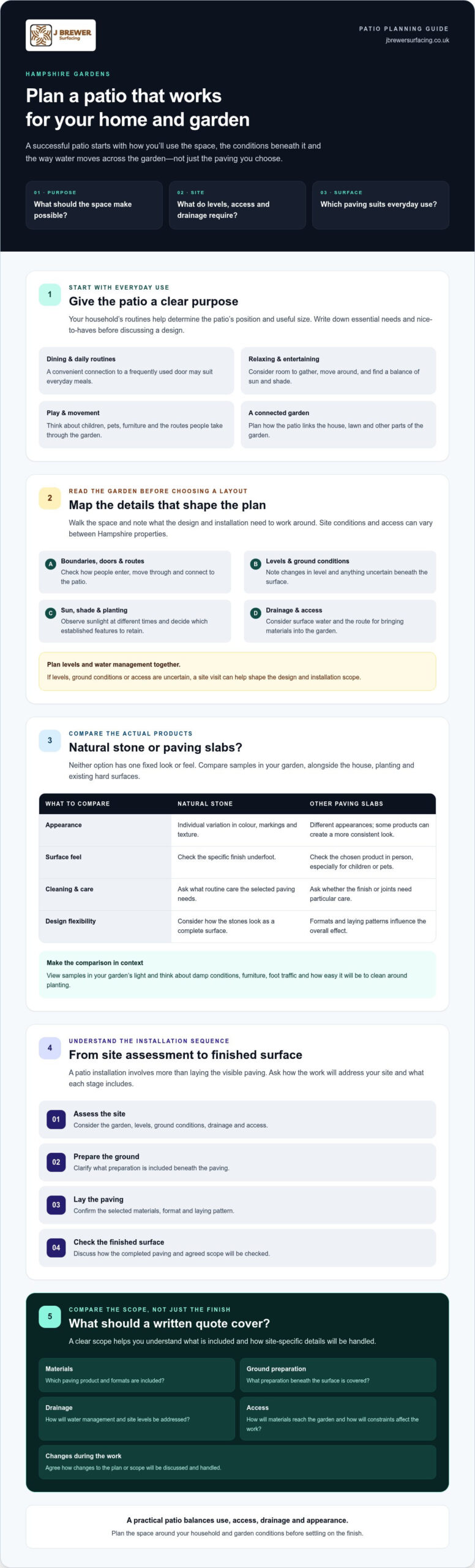
How to choose a patio layout that suits a Hampshire garden
A considered layout makes a patio feel connected to the home and garden, rather than like an isolated paved area. Its shape and position can create a direct route from the house, guide people towards a lawn or planted corner, or define a comfortable place to sit. For patio installation Hampshire homeowners should consider levels and water management as part of the layout from the start, not as details to resolve after choosing a shape.
Should the patio sit beside the house or further into the garden?
A patio beside the house can make carrying meals outdoors and moving between rooms and garden spaces convenient. A position further into the garden may create a quieter destination for seating, with a different outlook or sense of privacy. Neither option is automatically best. Consider where sunlight falls, which views you want to enjoy, whether you’d prefer to screen neighbouring sightlines, and the routes people already take across the garden.
Boundaries, changes in level and restricted access can affect which positions are practical. If these features shape the design, discuss the options on site and ask how the proposed layout will connect with doors, paths and adjoining areas. This helps make the finished space attractive and straightforward to use.
How can paving work with turf, planting and boundaries?
Plan the transition from paving to lawn or planted beds as part of the overall design. A clear edge can distinguish a seating area from turf, while planting beside the patio may soften its outline. The right balance depends on the garden and how much open, paved space your household needs. Existing fencing and neighbouring sightlines can also influence where seating feels comfortable and whether the layout offers the privacy you want.
Site levels and water movement should guide decisions about position and edges. The design needs to work with the particular garden rather than assume the same ground or drainage conditions across Hampshire. Consider how people will move between the patio, planted areas and other routes, and how the layout will meet existing boundaries. If you’re also planning turf, think about how the paved and lawn areas will work together.
J Brewer Surfacing & Landscaping creates custom garden patios using natural stone and paving slabs. Discuss your patio layout with the contractor and explore an approach suited to your garden’s features and intended use.
Choosing a patio installer in Hampshire: compare the scope, not just the finish
A polished finished surface matters, but a successful patio project also depends on clear planning and careful preparation. Compare what each contractor has assessed and included, rather than judging proposals by photographs or headline totals alone. For patio installation Hampshire homeowners should look for a written scope that explains the work in clear, checkable terms.
What should a patio installation quotation explain?
Check that the quotation identifies the proposed area, paving category and finish, as well as the preparation and completion work included. It should explain how existing paving, access, drainage and edging will be handled where relevant to your site. If a contractor finds unexpected ground or other site conditions, ask how they’ll explain the implications and agree any changes before proceeding.
Compare like-for-like scopes. A lower total may reflect differences in what’s included, so ask questions if preparation, removal or finishing is unclear. Use this checklist when reviewing a quotation:
- Site assessment: What features, access arrangements and levels were considered?
- Materials: Which paving category and finish are specified?
- Preparation and water management: What work is included, and how will drainage be considered?
- Finishing and changes: What will be checked at completion, and how will adjustments to the agreed scope be discussed?
What should you ask a local patio contractor?
Ask who will assess the garden and explain the proposed installation approach. Clarify the expected timing, how materials will reach the work area, and how access and disruption will be managed. You can also ask to see examples of relevant completed patio work, then check whether the contractor currently covers your Hampshire location and postcode.
For Southampton projects, a dedicated patio installers guide can offer additional local context, but use it alongside a site-specific assessment rather than as a substitute. J Brewer Surfacing & Landscaping designs and installs custom garden patios using natural stone and paving slabs, and also offers patio maintenance and joint repairs. Its stated coverage includes Southampton, Winchester, Gosport, Fareham, Portsmouth, Romsey and Whiteley. Confirm current availability for your address.
When enquiring, share your garden’s layout, intended use and any access or level concerns, then request a project-specific assessment. Discuss your patio installation with J Brewer Surfacing & Landscaping.
Make your patio plans with confidence
A successful patio begins with how you want to use the garden, then brings layout, paving and site conditions together. Consider the routes between the house and seating, the garden’s levels and how water will be managed. When comparing contractors, look beyond the finished appearance. Check that each written scope explains the proposed materials, preparation, access and finishing so you can make a like-for-like decision.
For patio installation Hampshire homeowners can discuss custom designs using natural stone and paving slabs with J Brewer Surfacing & Landscaping. The company also offers patio maintenance and joint repairs, with stated coverage including Southampton, Winchester, Gosport, Fareham, Portsmouth, Romsey and Whiteley. Confirm current availability for your postcode when you enquire.
Ready to take the next step? Discuss your patio project with J Brewer Surfacing & Landscaping and request an assessment based on your garden. A clear brief and site-specific discussion can help you plan an outdoor space that suits your home.
Frequently Asked Questions
How long does patio installation take in Hampshire?
Patio installation in Hampshire has no single set timeframe. Duration depends on the area, access, preparation, chosen materials and conditions on site. A contractor should assess your garden before discussing the likely timescale and work sequence. Ask what could affect progress, such as existing paving that needs removing, and how you’ll be kept informed if the agreed plan changes. A site-specific estimate is more useful than a generic duration.
Which patio paving is best for a Hampshire home?
There’s no single paving choice that suits every Hampshire home. Compare natural stone and paving slabs by their appearance, surface feel, cleaning needs and suitability for how you’ll use the space. A sample may look different beside your home or planting than it does elsewhere, so view options in context if possible. Discuss your preferences and site conditions with an installer before settling on a material.
Does a new patio need drainage?
Water movement should be considered in every patio plan, but the appropriate approach depends on the garden’s levels, proposed surface and surrounding areas. Ask the installer how the layout will manage water and whether any site-specific requirements need checking. Don’t assume one drainage solution suits every Hampshire property. An assessment of your garden can help identify relevant considerations before the position, levels and installation approach are agreed.
What should be included in a patio installation quote?
A clear quote should describe the patio area, agreed paving, preparation work, installation and finishing. It should also explain relevant access arrangements and how unexpected site conditions or changes to the scope will be discussed. Ask for clarification if anything is unclear, including what happens to existing paving if it needs to be removed. Compare quotes with similar scopes rather than relying on headline totals alone, so you can understand what each contractor proposes.
Can an existing patio be replaced with a different layout?
A replacement patio can often be planned with a different layout, although the options depend on the garden’s levels, boundaries and access. During a site assessment, explain what you’d like to change and whether existing paving needs to be removed. Consider how the new paved area should connect with the house, lawn or garden routes. The contractor can then assess the site and discuss which layout options are practical for your property.
Does J Brewer Surfacing & Landscaping install patios across Hampshire?
J Brewer Surfacing & Landscaping states that it serves Hampshire and surrounding areas, including Southampton, Winchester, Gosport, Fareham, Portsmouth, Romsey and Whiteley. Coverage and availability may depend on your precise location and project, so confirm your postcode directly. The company designs and installs custom patios using natural stone and paving slabs, and also offers patio maintenance. Share your requirements when enquiring to discuss whether the service is available for your garden.